When you look around yourself, what do you find? Appliances, remotes, gadgets and whatnot.
Don’t forget the screen of your mobile phones which is your true friend-forever these days. Ever wondered where all these developments are coming from? How is it all done? What is the science behind it?
Indeed the technical geeks may know all the answers. But for the clarity of everyone, the answer is Electrical and Electronics engineering. See, there are two important aspects of technology developments- Software and Hardware. The peripherals you see day in and day out are held with circuits and networks. Electronics and Electrical engineering is essentially the study of the same.
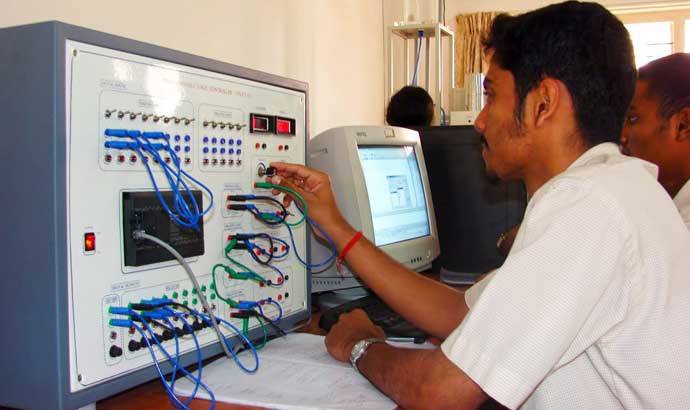
The programs offering this science, i.e., B.Tech in EEE are four years of courses. These are well equipped with theoretical and practical subjects. Students get exposed to lab work, research work, project designing and more. The academic framework is designed in such a way that the students are able to grasp every concept from basics to advance level. Students are regularly exposed to workshops and live training. This includes Electrical Technology Lab, Control System Practicals, Modeling and Simulation labs and more. Students get to do a deep study in electricity, transmission, feedback systems and more.
As the program comes closer to its culmination, students get numbers of opportunities to intern with leaders in this field. It is an undeniable fact that only application and guidance of an experienced mentor can nurture a student into a fine professional. So al these are imperative to understand the science of Electronics and Communications.
The Eligibility Criteria to Participate in B.Tech EEE
To participate in B.tech EEE, candidates must fulfil the eligibility criteria as prescribed by the official guidelines. Candidates must study science subject in class 12th. Though the minimum marks criteria differ from college to college, yet one must strive to secure a minimum of 60% in the Higher secondary school examination.
The sky is the limit when it comes to the scope of electrical and electronics engineering course. Students get the opportunity to work in different spaces. Today, both the private sectors and government ones look for electronics professionals. There is a constant requirement of such calibre in a wide-ranging space such as Oil and Gas, Electrical Motors, Power Plants and what not.
Some of the prominent organizations in this field are- GAIL, Oil and Natural Gas Corporation (ONGC), Bharat Heavy Electrical Limited (BHEL), Steel Authority of India Limited (SAIL), etcetera. Every year they recruit a good number of polished graduates in this domain.
The starting salary is usually Rs 4.5 LPA and above. Professionals observe a rise as they grow in their experience. Now the last but not the least. One of the most crucial points is that only those students who genuinely feel the drive to expand in this field must go for it. The rest who are just looking at that good salary package might get burnt out during this program. As it is a highly intensive course, that only curious minds can understand its grasp in the most real sense. So kindly think it through before making the final decisions. Rest, this field is highly in demand today and is expected to only rise in the coming times.
 My Education Views